Segovia for Solo Travellers: Where to Eat and Walk Alone
 Segovia for Solo Travellers: Where to Eat and Walk Alone
A practical guide to walking Segovia's old town on your own, from the Aqueduct to the Alcázar, with honest notes on where to eat without feeling out of place.
Walking the Old Town at Your Own Pace
Segovia rewards the traveller on foot, and almost everything worth seeing sits inside a compact loop. Start at the Plaza del Azoguejo beneath the Roman Aqueduct, which is best seen in the early morning before the coach groups arrive from Madrid. From there, climb the Calle Real through the Plaza de San Martín and on to the Plaza Mayor. The distance is barely 1.5 kilometres, but the granite paving is uneven and the gradient is steady, so allow an hour with stops. The old town is walkable in a full day, though two lets you slow down.
Solo walkers should know that the old town empties after about 20:00, when day-trippers leave and locals retreat indoors. The streets around the Plaza Mayor stay reasonably busy until 22:00 in summer, but the lanes down towards the Eresma river become quiet and dim. If you are walking back to a hotel after dinner, stick to the lit route via Calle Isabel la Católica and the Plaza Mayor rather than cutting through the alleys below the Alcázar. The Aqueduct is floodlit until around midnight and makes a fine landmark to navigate by.
The Classic Sights, and What to Skip
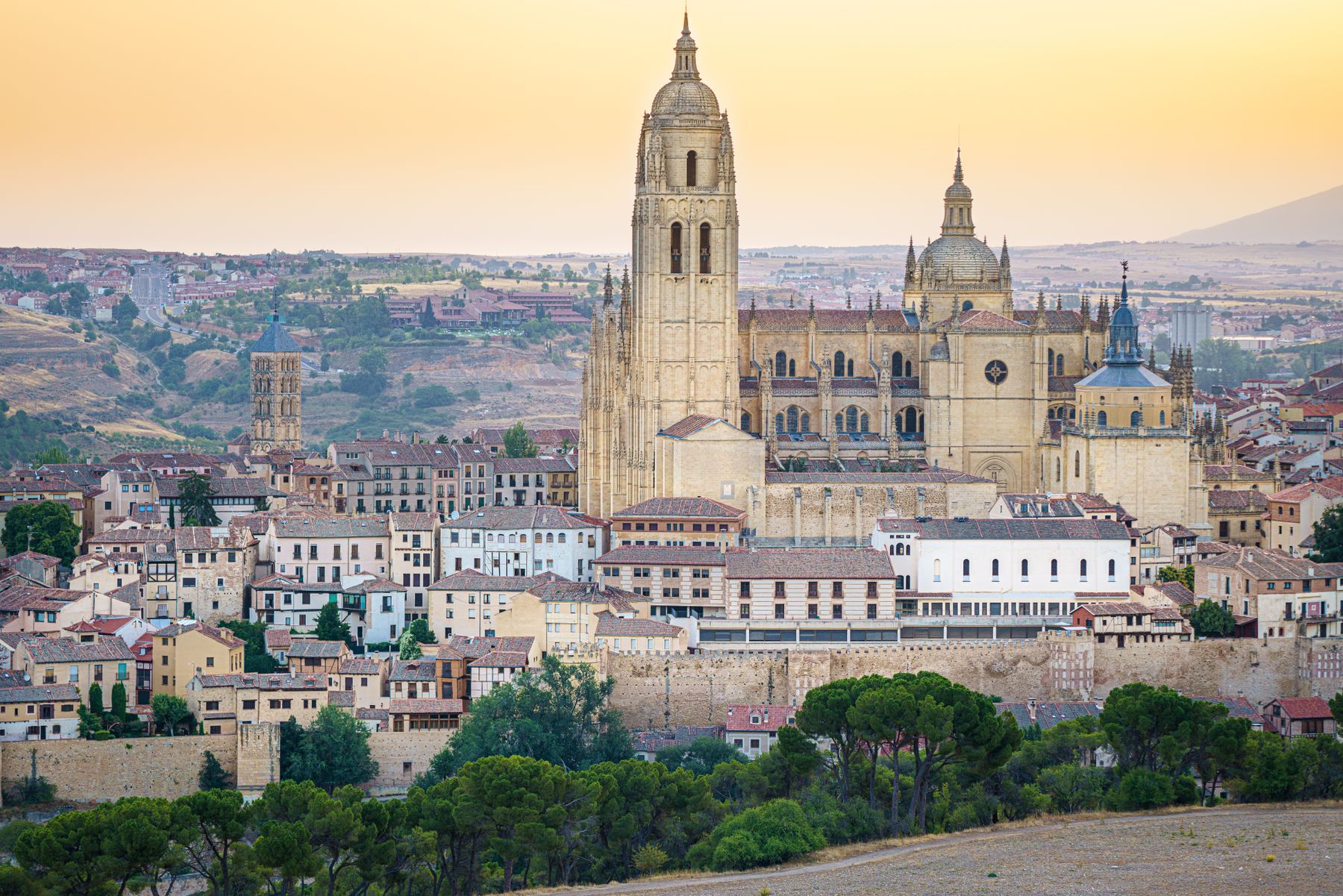
The Alcázar and the Cathedral are both worth your time and money, though neither is enormous. The Alcázar takes about 90 minutes with the tower climb, and the cathedral roughly 45. Book the Alcázar online a day ahead in July and August, when queues build by mid-morning. The Jewish Quarter around Calle Judíos and the Corpus Christi convent is small and free to wander. The cathedral cloister is a peaceful pause, and the view from the Alcázar tower over the Eresma valley is the single best vantage point in the city.
Skip the crowded souvenir stretch of Calle Real if you are short on time and head instead for the quieter lanes between the Plaza de San Esteban and the Puerta de Santiago, where the Romanesque churches of San Esteban and San Millán stand almost unvisited. The Walls of Segovia walk is pleasant but offers less than the tower views. Casa de los Picos on the Calle Real is a five-minute curiosity, not a destination. Best months are May, June, September and October; July and August are hot and busy, and winter mornings can be genuinely cold at this altitude.
Eating Alone Without Awkwardness
Segovia's restaurant culture is built around long lunches, which actually suits solo diners. The famous cochinillo asado is a whole suckling pig, so it is impractical for one, but many mesones in the old town serve half portions or a menú del día at lunch. Expect a three-course midday menu in the region of 20 to 35 euros at a mid-range mesón near the Plaza Mayor, and rather more at the celebrated asadores. The local judiones de La Granja bean stew and the ponche segoviano pastry are easier solo orders than the roast pig.
For casual eating, the bars around the Plaza Mayor and along Calle Cronista Lecea serve tapas at the counter, where a single traveller is entirely normal. Lunch runs from about 13:30 to 16:00 and dinner rarely starts before 21:00, so plan a late-afternoon snack or you will be hungry. The covered market at the Plaza del Azoguejo has stalls and simple counters for a quick plate. For coffee and a pastry, the cafés on the Plaza Mayor are pleasant but pricey for the setting; the side streets off Calle Real are cheaper and quieter.
Where to Base Yourself and How to Get In
For a solo trip, I would book a small hotel or hostal inside the old town, within the triangle formed by the Aqueduct, the Plaza Mayor and the cathedral. Being able to walk to dinner and back without a taxi is worth more than a larger room on the outskirts. Prices for a simple double in the old town commonly run from around 55 to 90 euros a night outside peak weekends, rising in September. The area around the Plaza Mayor is central but can be noisy; the streets towards San Millán are calmer and still ten minutes on foot from everything.
Segovia is easy to reach without a car. The high-speed Avant train from Madrid Chamartín takes about 27 minutes and arrives at Segovia-Guiomar station, which sits roughly 4 kilometres outside the city; the number 11 bus connects it to the Aqueduct in about 15 minutes. Buses from Madrid's Moncloa terminal take around 75 to 90 minutes and drop you closer to the centre. Driving from Madrid is about 90 kilometres and 70 minutes via the AP-6, but parking in the old town is limited, so use one of the car parks near the Aqueduct.
Before you book
The questions people ask about Segovia, answered with this month’s numbers.
Segovia is a calm, small city and the old town is well used during the day. As anywhere, the lanes below the Alcázar and the riverside paths are quiet after dark, so walk back via the Plaza Mayor. Take normal care with belongings around the Aqueduct, where crowds gather.
One full day covers the Aqueduct, cathedral and Alcázar at a brisk pace. Two days lets you add the Jewish Quarter, the Romanesque churches and a slow lunch, and is what I would book for a relaxed solo trip.
Yes, and many people do. The Avant train from Chamartín takes about 27 minutes, plus a 15-minute bus from Guiomar station into town. A day trip works, but staying one night means you see the Aqueduct lit up and the old town without crowds.
Bars around the Plaza Mayor and Calle Cronista Lecea serve tapas at the counter, where eating alone is normal. At lunch, many mesones offer a menú del día, typically 20 to 35 euros. Dinner starts late, rarely before 21:00, so plan a snack.
The cochinillo is a whole roast pig and awkward for one, so try judiones de La Granja bean stew, sopa castellana or a half raciones of roast lamb. Finish with ponche segoviano, the local custard-filled pastry, which is sold by the slice.
In July, August and on Spanish public holidays, yes. Buy a timed ticket online a day or two ahead, and go at opening time to climb the tower before the coach groups arrive from Madrid around mid-morning.
May, June, September and October bring mild weather and manageable crowds. July and August are hot at this altitude and busy with day-trippers, while winter mornings can be very cold. Weekdays are quieter than weekends year-round.
The station is about 4 kilometres out. Bus number 11 runs to the Aqueduct in roughly 15 minutes. Taxis wait outside the station for a short ride. The older Segovia station is closer to the centre but served by slower regional trains.