Segovia's Judería: A Walking Guide to the Old Jewish Quarter
 Segovia's Judería: A Walking Guide to the Old Jewish Quarter
How to walk the old Jewish quarter of Segovia in a half-day, which streets and landmarks anchor the route, and where to base yourself for it.
Setting the boundaries of the Judería
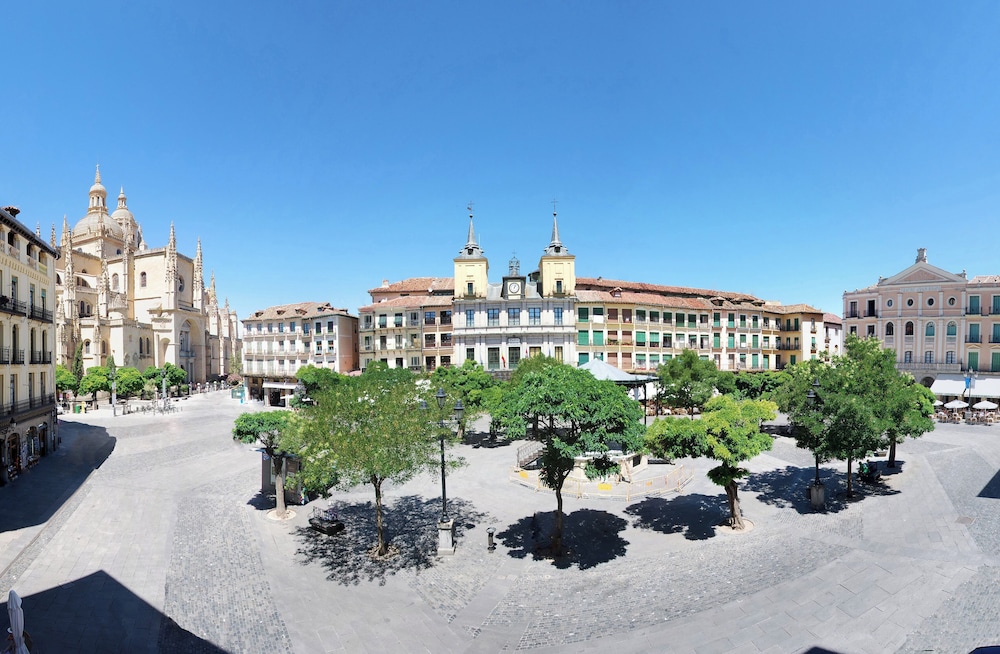
Segovia's Jewish quarter sits in the western half of the old city, inside the line of the medieval walls and below the Alcázar. For orientation, treat the Plaza Mayor as your starting point: from its western corner, the Calle de la Judería Vieja drops towards the Puerta de San Andrés, and the lanes running north of it — Calle Almuzara among them — formed the densest part of the medieval Jewish settlement. The whole area is compact enough to walk in an afternoon; the practical constraint is gradient, not distance. Wear shoes with grip, because the cobbles between the Plaza Mayor and the Alcázar are steep and polished.
The old synagogue and the Puerta de San Andrés
The most tangible survivor is the former synagogue on Calle de la Judería Vieja, now the Centro Didáctico de la Judería. It is a small, low-roofed room with brick arches and a raised women's gallery, and it explains in a few dozen panels how the community lived before the expulsion of 1492. Entry is modest and it takes perhaps half an hour. I would do it first, before fatigue sets in, because the display gives names and trades to streets you are about to walk. Check opening hours the day before; out-of-season afternoons can be short.
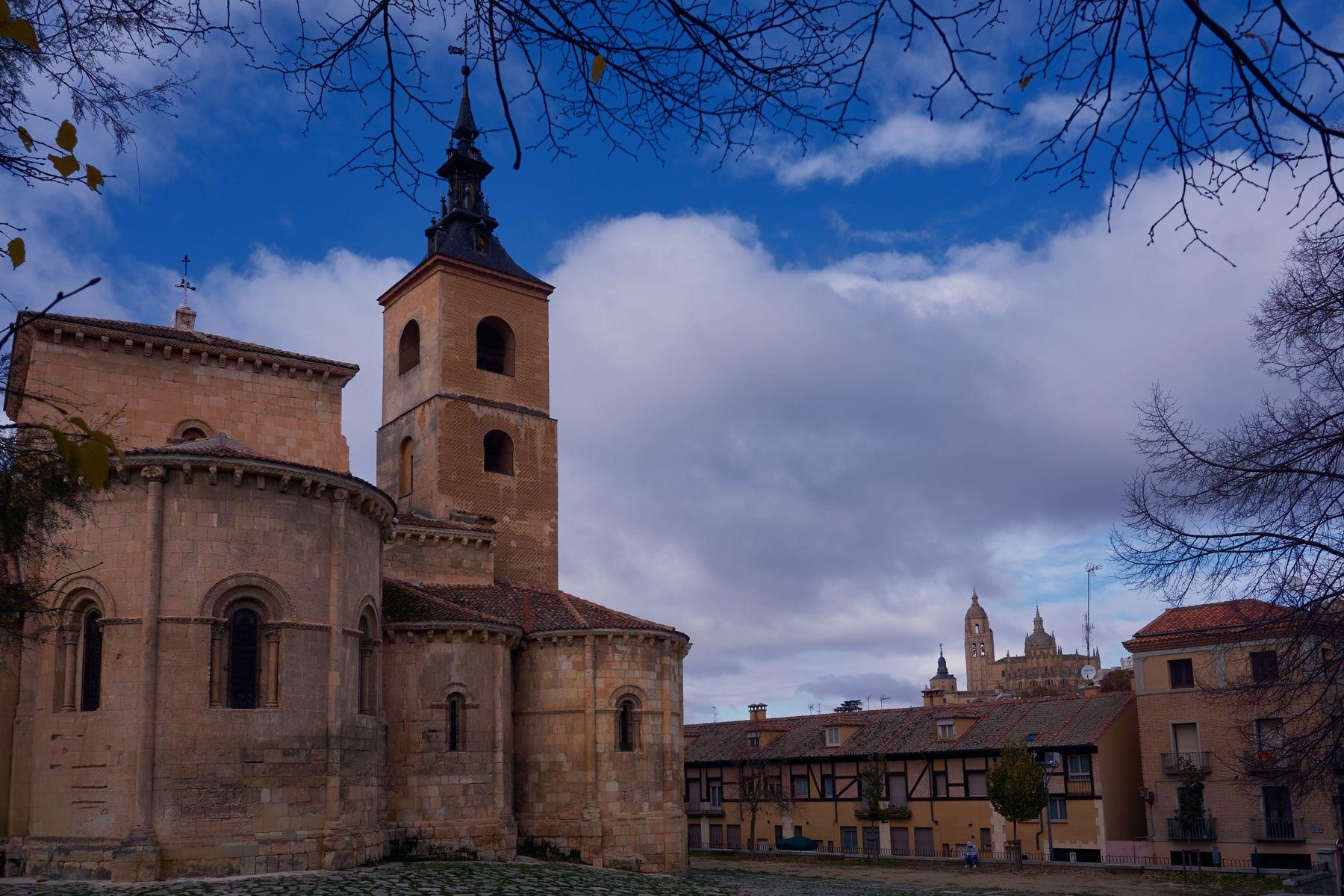
From the synagogue, walk south-east to the Puerta de San Andrés, one of the best-preserved gateways in the wall circuit, then follow the outside of the walls on the Paseo del Obispo for the classic view back up at the apse of the cathedral and the Alcázar towers. This ten-minute stretch is the single best photograph in Segovia and costs nothing. Come back through the gate and turn uphill along Calle de los Leones, where the old quarter's narrowest passages are.
Old and new quarters, and what to skip
The Jewish quarter's streets flow into the old Christian quarter around the Plaza Mayor and the cathedral, and the transition is easy to miss on foot. The clearest marker is the Plaza de la Merced, where the lanes widen and the shops change character. If you want a structured route, follow the signposted Judería walk of roughly two kilometres, which links the synagogue, the gate, the Plaza del Socorro and the Alcázar gardens in about ninety minutes at a gentle pace. Best months are April to June and September to October; July and August afternoons are hot and the uphill lanes hold the heat.
Skip the guided horse-drawn tours around the Aqueduct — they cover ground you can walk and add little to the Jewish quarter story. Skip, too, trying to see the Judería and the Aqueduct in the same tight morning: the Aqueduct is a fifteen-minute walk east of the Plaza Mayor, and the combination makes for a rushed, uphill day. I would book a hotel inside the walls west of the Plaza Mayor, so the quarter is on your doorstep at breakfast and again at dusk, when the day-trippers from Madrid have gone and the lanes empty out.
Practical timing and where to stay
Segovia is 90 minutes from Madrid by the high-speed line to Segovia-Guiomar, but note the station is outside town, with a bus connection to the Aqueduct. The older Renfe station closer to the centre serves slower regional trains. Coming by road from Madrid takes about an hour via the AP-6. If you are staying overnight, aim to arrive by late morning: the Judería is quietest before noon and again after seven in the evening, and the synagogue and the cathedral both reward a second, calmer look.
For lodgings, three areas make sense. Inside the walls near the Plaza Mayor, small hostales and converted townhouses give the atmosphere but limited parking; expect the middle of the price range. Along the Avenida del Acueducto, hotel rooms are larger and easier to reach by car, a ten-minute walk from the Judería. Near the Guiomar station, rooms are cheaper but you are a bus ride from everything worth seeing. I would book the Plaza Mayor area for a two-night stay and the Acueducto avenue for a single night with a car.
FAQ
q: How long does the Judería walk take?||a: The signposted route runs about two kilometres and takes ninety minutes at an easy pace, plus half an hour at the Centro Didáctico de la Judería. Allow a half-day if you add the cathedral and the walls' exterior path.
q: Is the Jewish quarter accessible for people with limited mobility?||a: Only partly. The lanes are cobbled and steeply graded, with steps between some streets. The synagogue and the Plaza Mayor area are reachable by taxi, but the Puerta de San Andrés and the wall path involve significant slopes and uneven surfaces.
q: When is the best time to visit Segovia's old Jewish quarter?||a: April to June and September to October give comfortable temperatures for the uphill lanes. Avoid July and August afternoons. Weekdays are quieter than weekends, when Madrid day-trippers fill the Plaza Mayor from mid-morning.