Two Hours in Segovia's Judería: What You Can Actually See
 Two Hours in Segovia's Judería: What You Can Actually See
A compact walking route through the old Jewish quarter below the Alcázar, timed for a short stop between Madrid and the aqueduct.
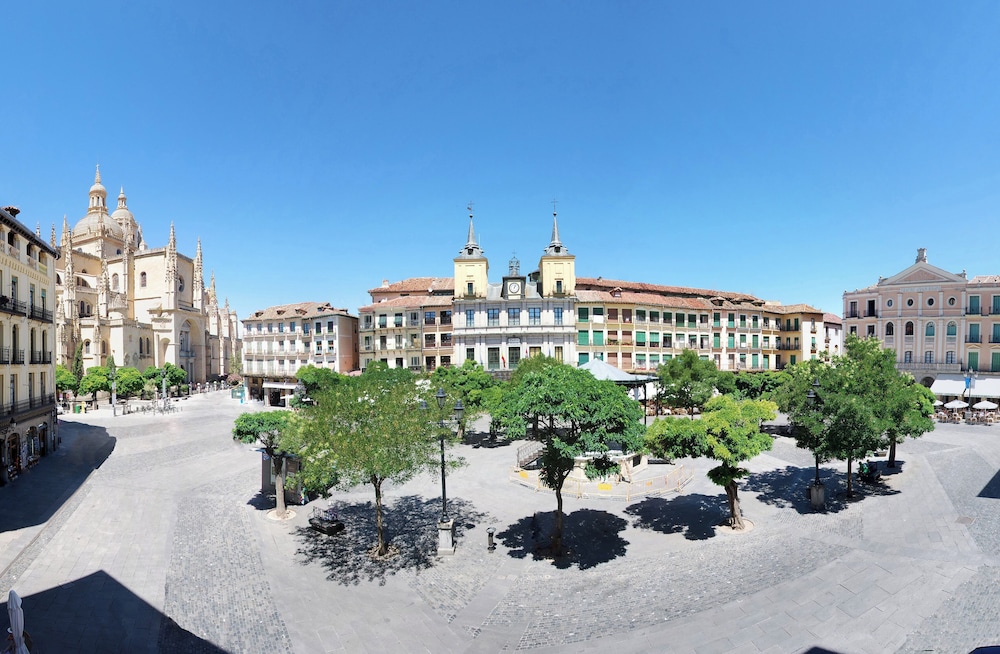
Start at the Plaza Mayor and drop into the Judería
From Plaza Mayor, walk west past the cathedral's north side and follow Calle Velarde as it bends downhill toward the Judería. The old Jewish quarter of Segovia occupied the wedge of land between the cathedral, the Alcázar and the Eresma gorge, and its streets still carry the medieval layout: Calle de la Judería Vieja, Calle de la Judería Nueva and the narrow steps of Calle del Malcón. Two hours is enough for the core of it if you walk briskly and do not queue for anything. Weekday mornings between 10am and noon are quietest; July and August afternoons are hot and crowded.
The first thing to know is that the Judería is not a walled museum district. It is a lived-in neighbourhood of low houses, brick arcades and small plazas, and most of it is free to walk. What costs money is the interior of the Centro Didáctico de la Judería on Calle de la Judería Vieja, a small interpretation centre in a former synagogue complex that explains the community's history in Segovia before the 1492 expulsion. Allow twenty minutes, not more, and check opening hours at the door before committing — midday closures are common.
The churches that were synagogues
The single most rewarding stop is the Corpus Christi convent on Calle del Corpus, a short climb from the Judería. Its church was built as a synagogue in the thirteenth century and later converted; inside, the women's gallery and the brickwork of the former prayer hall survive, and the cloister holds Romanesque and Gothic pieces. Entry is modest and the visit takes about fifteen minutes. If you only pay for one interior in the quarter, make it this one. Photography without flash is generally permitted, though signage changes.
A second option is the Convento de San Antonio el Real, near the Santo Domingo gate, but it sits outside the Judería proper and eats time. Skip it on a two-hour stop. Also skip the Puerta de San Andrés if you are short of time: it is a photogenic gate and tower on the old wall, but you will pass similar stonework on the way to the Alcázar anyway. Better to spend the minutes on the streets themselves, where the brickwork and the glimpses down to the Eresma are the real attraction.
Views, walls and the walk to the Alcázar
From Calle de la Judería Vieja, follow the lanes west and downhill to the Puerta de la Clamores and the viewpoint over the Eresma valley. From here the Alcázar rises directly above you, and the path along the outside of the walls toward the Parral monastery gives the best photographs in Segovia — better than the crowded plaza in front of the castle. The descent is cobbled and uneven; wear shoes with grip. Allow fifteen minutes down and back up, and rather more if you stop for pictures.
If you have energy left, continue past the Alcázar to the Mirador de la Pradera de San Marcos, ten minutes further on along the river path, for the classic view of the castle from below. A taxi back up to the aqueduct from there takes about ten minutes and costs a few euros; walking back uphill to Plaza Mayor takes twenty-five minutes at an honest pace. In my view the loop down to the Clamores gate and back is the better use of twenty minutes than the longer river detour, unless you are staying the night.
Practical timing and where to base yourself
Segovia is 27 minutes from Madrid Chamartín by high-speed train and about an hour by regional train from Atocha, but the station is outside town: the bus from outside the station to the aqueduct takes around fifteen minutes. Arriving by car from Madrid is roughly an hour via the AP-6, and parking near the aqueduct fills early. If your whole visit is two hours, the train is the lower-friction choice and leaves you closer to the old town than the bus station does.
That said, two hours barely covers the Judería, the aqueduct and a coffee, let alone the cathedral and the Alcázar interiors. If your schedule allows, book a hotel inside the old town rather than out by the station, and give Segovia a full day plus a morning. Spring and autumn are the best months: May, June, September and October give comfortable walking weather and thinner crowds than August. The town is small enough to walk end to end in twenty minutes, which makes an overnight stay unusually good value for a city of this quality.
Before you book
The questions people ask about Judería, answered with this month’s numbers.
The core streets between Plaza Mayor and the Alcázar take about forty minutes at a relaxed pace, including the Clamores viewpoint. Add twenty minutes for the Centro Didáctico and fifteen for Corpus Christi and you have the two hours comfortably filled.
The streets and viewpoints are free. Paid interiors are the Centro Didáctico de la Judería and the Corpus Christi convent church, both inexpensive. Prices vary, so check at the door rather than relying on older guidebooks.
Segovia-Guiomar is the high-speed station, around 27 minutes from Madrid Chamartín, but it sits outside town. A connecting bus reaches the aqueduct in about fifteen minutes. The regional station, Segovia, is closer to the centre.
From Segovia-Guiomar, bus line 11 runs to the aqueduct and Plaza Mayor area in roughly fifteen minutes. Taxis wait outside and take about ten minutes. Walking from the station is impractical for a two-hour visit.
Weekday mornings between 10am and noon, outside July and August. Segovia draws heavy day-trip traffic from Madrid, so Sundays and public holidays are the busiest. May, June, September and October offer the best balance of weather and crowds.
Skip the Alcázar interior, the cathedral interior and San Antonio el Real; each needs thirty minutes or more and queues can swallow your whole window. The outside of the Alcázar and the wall path give better value per minute.
Just about, if you walk directly from the aqueduct up Calle Real to Plaza Mayor and then down through the Judería. The aqueduct needs only ten minutes to admire from Plaza del Azoguejo; the walking between the two takes about fifteen.
Inside the old town, within the triangle of Plaza Mayor, the aqueduct and the Alcázar, so everything is walkable. Hotels near the aqueduct suit early trains; those near Plaza Mayor suit evening meals. Book ahead for May, June, September and October weekends.