Walking Segovia's Judería Without a Map: Landmarks That Guide You
 Walking Segovia's Judería Without a Map: Landmarks That Guide You
Use the aqueduct, the cathedral tower and the old synagogue to find your way through the medieval Jewish quarter.
Start at the Aqueduct and Head Uphill
The Judería occupies the land between Segovia's Roman aqueduct and the Alcázar, a compact triangle of lanes that drops away from the Plaza del Azoguejo. Begin under the aqueduct's highest arcade, where Calle Cervantes climbs southwest. You do not need a map to know you are entering the old Jewish quarter: the street narrows, the granite walls close in, and the shops give way to blank facades. The Judería's main artery, Calle de la Judería Vieja, runs parallel to Calle Juan Bravo, the commercial spine of the old town. If you keep the aqueduct at your back and the cathedral tower in view ahead, you cannot go far wrong.
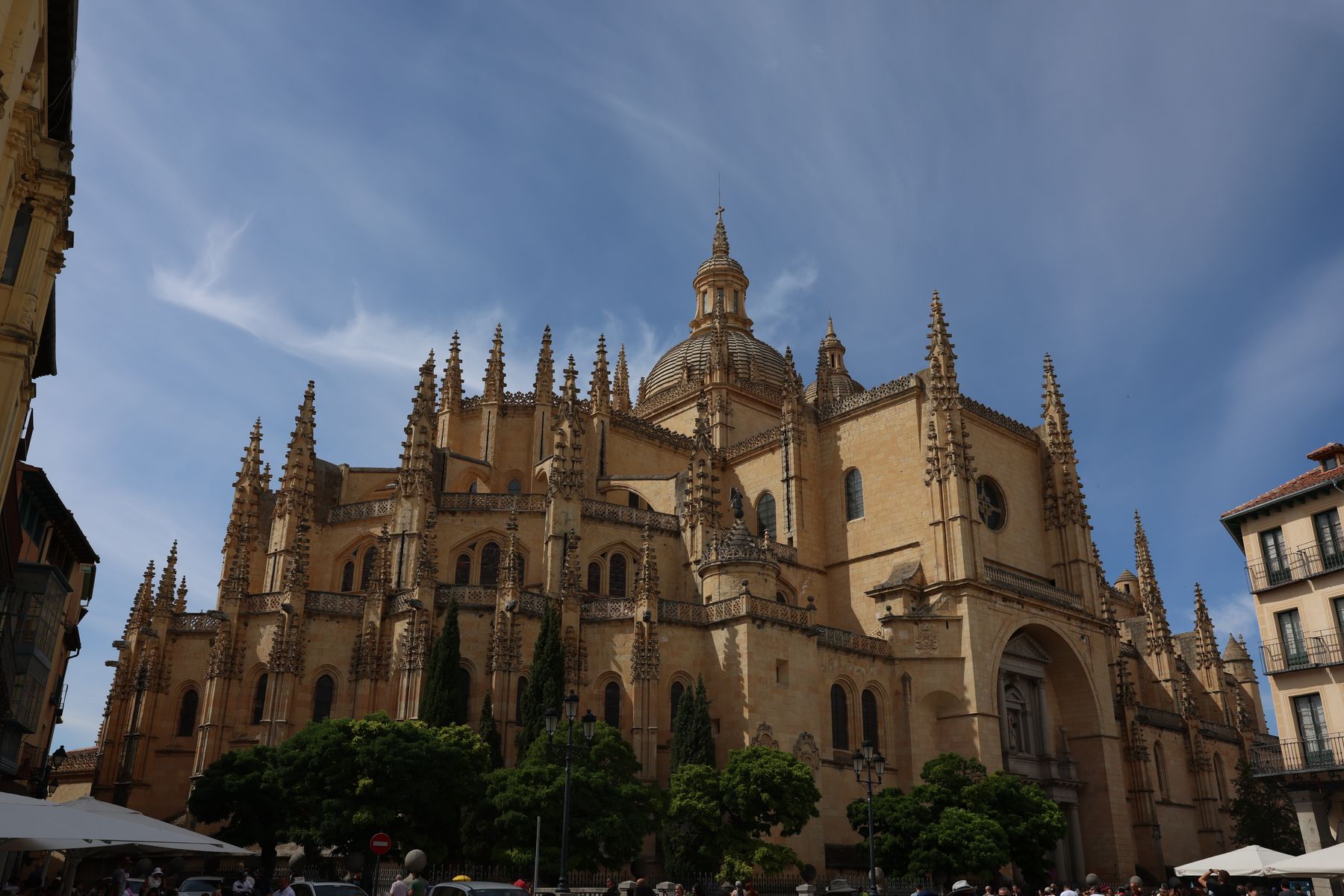
The cathedral's Gothic tower, finished in the 17th century, is the single most useful landmark in Segovia. It rises above every roofline in the old town, so you can orient yourself from almost any alley in the Judería. The walking is short — the quarter is barely 400 metres across — but the gradient is steady. Allow two hours to wander without rushing, more if you stop at the Casa de Abraham Seneor or the interpretation centre. Spring and autumn are the best months: July and August afternoons can reach 35°C, and many lanes offer little shade.
Reading the Streets: Sinagogues and Stone Signs
The Judería's surviving synagogue, the Sinagoga de Segovia on Calle de la Judería Vieja, is now the Centro Didáctico de la Judería. Its plain exterior gives little away, but the carved ceiling inside is worth the modest entry fee. A few steps away, the Casa de Abraham Seneor — the 15th-century home of the treasurer to the Catholic Monarchs — stands at the corner of Calle de la Judería Vieja and Calle de los Judíos. Neither building is large; look for the small stone plaques fixed to the walls, which name the lanes in Hebrew and Spanish and give dates. These signs are your best confirmation that you are still inside the old quarter.
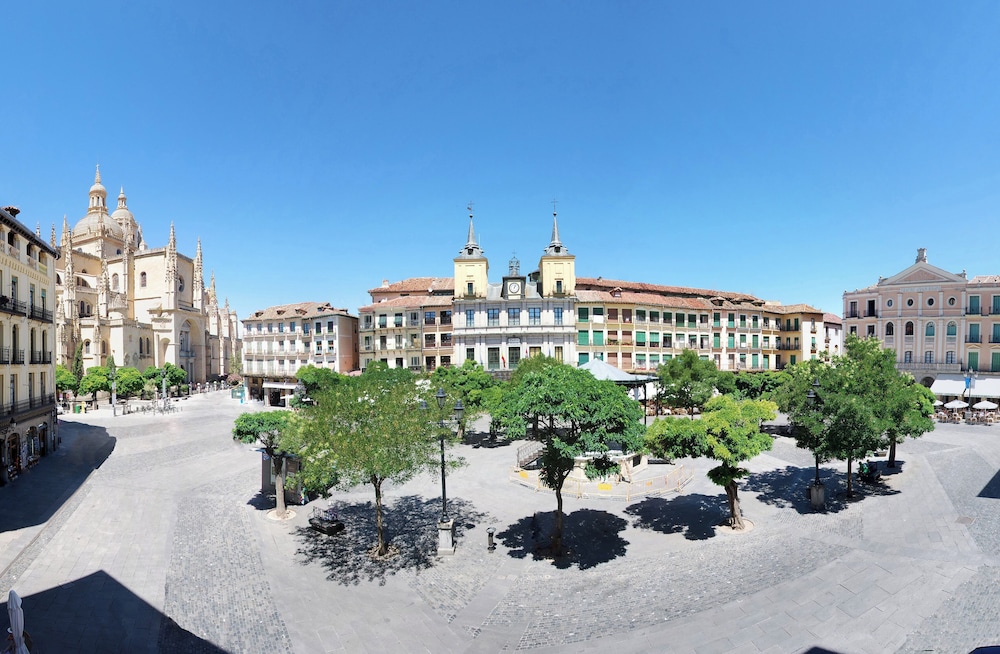
The Puerta de San Andrés, a gate in the old walls near the Plaza del Azoguejo, marks the southern edge of the Judería. From there, Calle de los Leones and Calle de la Judería Nueva lead north toward the cathedral. The lanes are too narrow for cars, so you will share them only with residents and other walkers. If you find yourself on Calle Juan Bravo, with its chain shops and cafés, you have left the Judería; turn west at the Plaza Mayor and drop back down. The tourist office on Plaza Mayor provides a free paper map, but the stone signs and the cathedral tower are enough for most visitors.
Where to Sleep in and around the Judería
Hotels inside the Judería itself are few and small, mostly converted townhouses with a handful of rooms. Expect to pay €90–€150 per night for a double in spring or autumn, and €70–€110 in January and February. The advantage is atmosphere: you step out of your door into lanes that are empty before 10am and after 8pm. The trade-off is access — taxis cannot enter the narrowest streets, so you may carry bags the last 100 metres. If you need a lift or onsite parking, look instead at hotels along Calle Juan Bravo or near the Plaza del Azoguejo, where larger properties have vehicle access and still leave you a five-minute walk from the synagogue.
I would book a small hotel on Calle de la Judería Vieja or Calle de los Judíos for a two-night stay, then move to a Parador or a hotel near the Alcázar if you want views over the Eresma valley. The Judería is quiet at night — there is little nightlife — so light sleepers should ask for a room away from the street. Book at least six weeks ahead for weekends in May, June, September and October, when Segovia fills with day-trippers from Madrid. The city is 90 minutes by train from Madrid's Chamartín station, and the station sits 2.5km outside town; a local bus or taxi covers the last stretch.
What to Skip and How to Pace the Walk
Skip the guided 'Jewish Segovia' tours that promise to show you the Judería in 45 minutes. The quarter is small enough to walk yourself, and the free interpretation centre on Calle de la Judería Vieja gives you the history without the markup. Also skip the souvenir shops that sell generic 'Sephardic' trinkets; the real interest is in the architecture and the stone plaques. If you have limited time, prioritise the synagogue, the Casa de Abraham Seneor and the Puerta de San Andrés, then walk up to the cathedral square for a coffee. The entire circuit takes under two hours at an easy pace.
Pace the walk for the light: the Judería's lanes face east–west, so morning sun reaches Calle de la Judería Vieja around 9am, and by 6pm in summer the walls glow. Avoid the midday heat in July and August by starting before 10am or after 5pm. Wear shoes with grip — the cobbles are polished and steep in places. There are public toilets at the Plaza Mayor and near the aqueduct, but few inside the quarter itself. If you are staying overnight, walk the lanes again after dinner; the Judería is at its most atmospheric when the day-trippers have gone.
Before you book
The questions people ask about Judería, answered with this month’s numbers.
No. Use the aqueduct as your southern marker and the cathedral tower as your northern one. The stone plaques on the lanes name each street in Hebrew and Spanish. A free map from the Plaza Mayor tourist office helps, but the quarter is small enough to explore by eye.
The core of the Judería is about 400 metres across. Allow two hours to walk it slowly and visit the synagogue and the Casa de Abraham Seneor. Add an hour if you stop for coffee on Plaza Mayor or continue up to the Alcázar.
The Sinagoga de Segovia (Centro Didáctico de la Judería) on Calle de la Judería Vieja, the Casa de Abraham Seneor at the corner of Calle de los Judíos, and the Puerta de San Andrés. The stone street plaques are minor landmarks but they confirm you are still inside the old quarter.
Small converted townhouses on Calle de la Judería Vieja or Calle de los Judíos put you in the quarter itself, with doubles around €90–€150 in high season. Hotels on Calle Juan Bravo or near the Plaza del Azoguejo offer easier vehicle access and are still a five-minute walk away.
May, June, September and October are ideal: mild temperatures and long daylight. July and August afternoons can exceed 35°C, so start early or walk after 5pm. January and February are quiet and cheaper, but some small hotels close for part of the winter.
The station is 2.5km from the old town. Local bus line 11 or a taxi (about 10 minutes) brings you to the Plaza del Azoguejo, at the foot of the aqueduct. From there, Calle Cervantes leads up into the Judería; the walk takes five minutes.
Several companies offer 45-minute tours, but the quarter is compact and the interpretation centre provides context for free. I would skip the tours and walk it yourself, using the synagogue and the stone plaques as your guides. A guidebook page is enough background.
Skip the souvenir shops selling generic Sephardic trinkets and the rushed guided tours. Focus on the synagogue, the Casa de Abraham Seneor and the Puerta de San Andrés. Also skip the midday walk in July and August; the lanes have little shade.