Walking Segovia's Old Jewish Quarter: A Self-Guided Route
 Walking Segovia's Old Jewish Quarter: A Self-Guided Route
A step-by-step walk through the Judería of Segovia, from the Plaza Mayor to the Puerta de San Andrés, with real streets, landmarks and honest advice on what to skip.
Starting at the Plaza Mayor and the old aljama
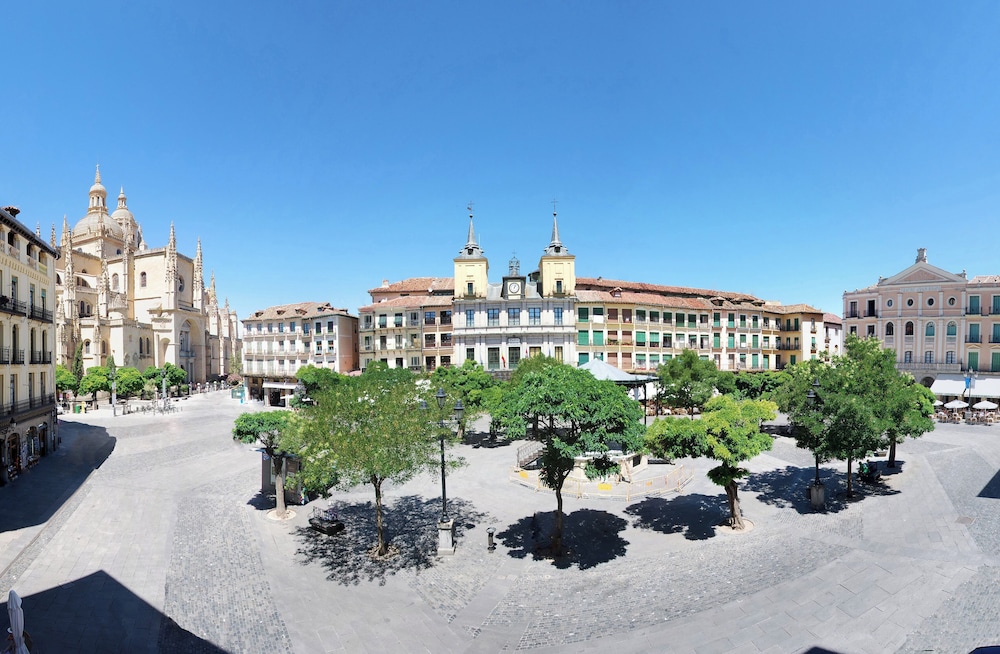
Begin on the Plaza Mayor, the city's main square, and walk towards the corner near the church of San Miguel. From here, the Calle de la Judería Vieja drops downhill into the heart of what was Segovia's Jewish quarter. This narrow lane, together with the Plaza de la Judería Vieja and the surrounding streets, formed the aljama, the Jewish community that lived here from the 12th century until the expulsion of 1492. The streets are short, cobbled and steep in places, so wear shoes with grip. Allow two to three hours for the full route at an unhurried pace.
The main synagogue of Segovia stood on this street, and although the building has been altered over the centuries, the line of the lane and the scale of the houses give a fair sense of the medieval layout. Look for the plaque and the remnants of stonework near the corner with Calle de los Leones. Casa Abraham Seneor, the residence associated with the prominent community leader and financier Abraham Seneor, sits nearby and is now a private building with a restaurant; you can see the facade from the street. Morning light is best for photographs here, before the tour groups arrive around 11am.
The Plaza del Corpus and the old synagogue site
Continue downhill to the Plaza del Corpus, a small square that was the civic and religious centre of the Jewish quarter. The Iglesia del Corpus Christi, a short walk away, was formerly the Sinagoga Mayor of Segovia before its conversion to a church in the 15th century. The interior preserves a notable ceiling and capitals that reflect its earlier use. Opening hours are limited, generally mid-morning to early afternoon with a break at midday, and entry is modest or by donation depending on the season; check locally before you go. Even from outside, the apse facing Calle del Corpus tells you how substantial the building was.
From the plaza, walk down Calle del Corpus towards the Puerta de la Clamor, the gate that once marked the boundary of the Jewish quarter. The gate is a simple stone arch, but it is one of the few surviving physical markers of the old limits of the aljama. Nearby, the Casa Museo de Antonio Machado on Calle de los Desamparados is a useful pause if you want a different thread of Segovia's history; the poet lived there from 1919 to 1932, and the house keeps regular opening hours.
The Puerta de San Andrés and the western edge
Climb back up and follow Calle de la Judería Nueva towards the Puerta de San Andrés, one of the medieval gates into the walled city. The gate sits close to the church of San Andrés and the Plaza de San Andrés. The street names Judería Vieja and Judería Nueva are themselves the clearest guide: the old quarter lay inside the walls, while the newer quarter spread outside after the community outgrew the original space. Walk both streets together and the geography makes sense quickly. The whole circuit is under two kilometres, but the gradients are real, and the cobbles are uneven.
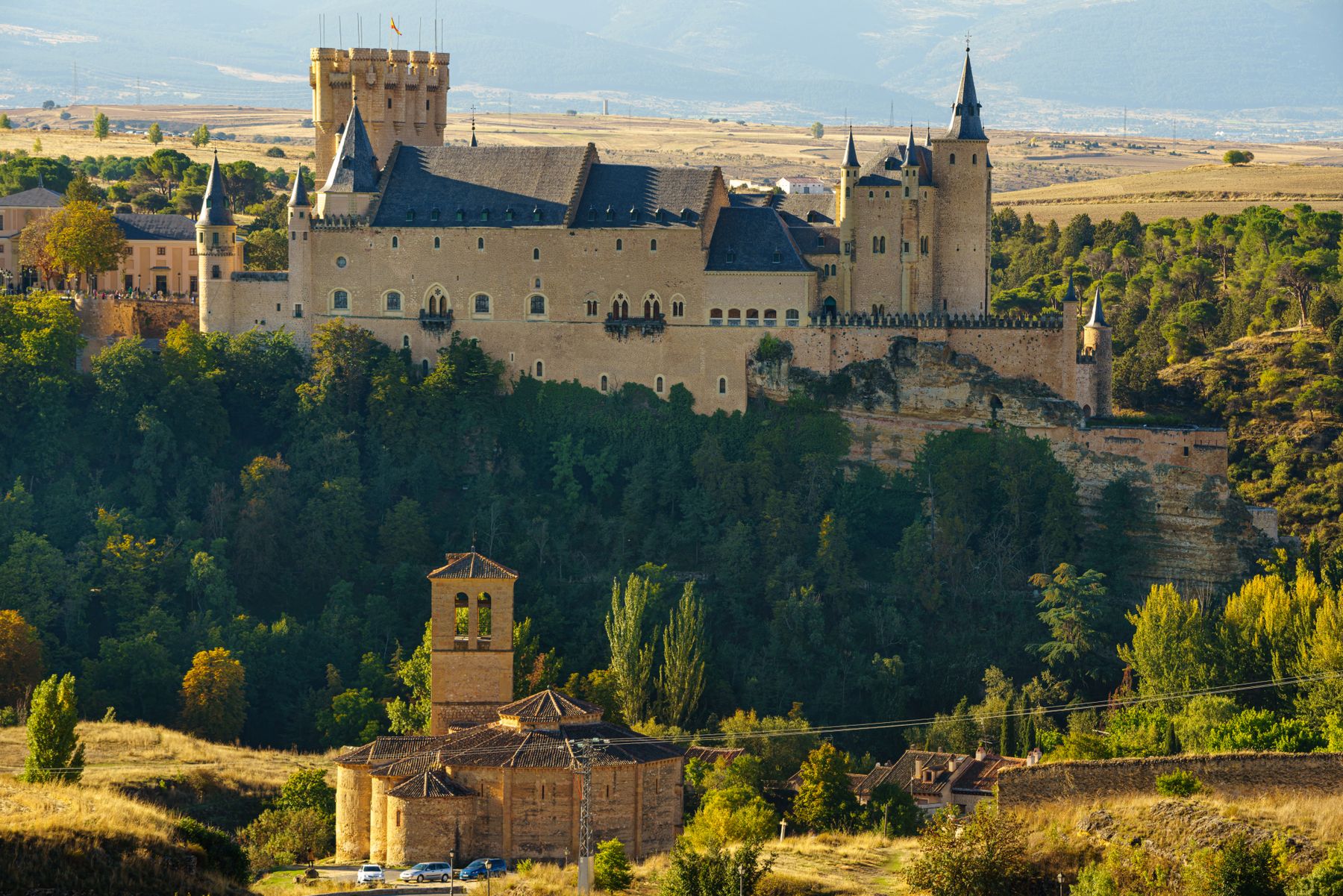
If you have energy left, the walk up to the Alcázar takes about 15 minutes from the Plaza Mayor along Calle del Alcázar. The fortress is open daily, with longer hours from April to October, and a combined ticket with the cathedral is not offered; each is priced separately at the ticket office. I would book the Alcázar for late afternoon and leave the Jewish quarter for the morning, when the lanes are quiet. Skip the little tourist train that loops the old town: the route is short enough to walk and the streets are the point.
Practicalities: when to go and where to stay
April to June and September to October are the best months for this walk. July and August are hot on the open stretches near the gates, and shade in the lanes is patchy. Segovia sits at around 1,000 metres, so the sun is strong even in spring. Most of the route is free; the Iglesia del Corpus Christi and the Casa Museo de Antonio Machado charge small entry fees, and the Alcázar and cathedral are the other paid stops. The tourist office on the Plaza Mayor can confirm current opening hours, which shift between winter and summer.
For a base, the streets between the Plaza Mayor and the Aqueduct keep you within a 10-minute walk of the whole route. The area around the Plaza del Azoguejo, below the Aqueduct, has the widest choice of hotels and is flat, while the old town inside the walls is quieter but hilly. Trains from Madrid arrive at Segovia Guiomar, about 15 minutes by bus or taxi from the centre; the older station, Segovia Avenida, is closer to the walls. If you want to combine the walk with a day trip, Ávila is 55 minutes by road or a short regional train ride away, but the Jewish quarter here deserves a full morning.
Before you book
The questions people ask about Segovia, answered with this month’s numbers.
The circuit from Plaza Mayor to the Puerta de San Andrés and back is under two kilometres, but the gradients and stops mean two to three hours at a relaxed pace. Add an hour if you visit the Iglesia del Corpus Christi and the Casa Museo de Antonio Machado.
The former Sinagoga Mayor is now the Iglesia del Corpus Christi. Entry is modest or by donation depending on the season, and opening hours are limited, generally mid-morning to early afternoon with a midday break. Check current hours at the Plaza Mayor tourist office before setting out.
April to June and September to October. Temperatures are comfortable and the lanes are quieter. July and August are hot, and shade is patchy near the gates. Segovia sits around 1,000 metres, so sun protection matters even in spring.
High-speed trains from Madrid Chamartín reach Segovia Guiomar in about 27 minutes, then a bus or taxi takes 15 minutes to the centre. The older Segovia Avenida station is closer to the walls. Buses from Madrid's Moncloa take around 80 minutes.
The streets between Plaza Mayor and the Aqueduct put you within 10 minutes of the whole route. The Plaza del Azoguejo area below the Aqueduct is flatter and has the most hotels. The old town inside the walls is quieter but hilly.
Calle de la Judería Vieja, Calle de la Judería Nueva, the Plaza de la Judería Vieja and the Plaza del Corpus are the core streets. The Puerta de la Clamor and the Puerta de San Andrés mark the old boundaries of the aljama.
Yes, but in the late afternoon. Morning suits the Jewish quarter, when the lanes are quiet. The Alcázar is open daily with longer hours from April to October, and tickets are bought separately from the cathedral; there is no combined ticket.
The tourist train that loops the old town adds little, as the streets are short enough to walk. Skip the midday hours for the Corpus Christi church, which often closes then. Give the Aqueduct a separate visit rather than squeezing it in.