Walking Segovia's Old Town: Slopes, Steps and a Sensible Pace
 Walking Segovia's Old Town: Slopes, Steps and a Sensible Pace
Segovia's historic centre sits on a rocky spur between the Eresma and Clamores valleys, and the walking is hillier than most visitors expect.
Reading the Terrain Before You Book
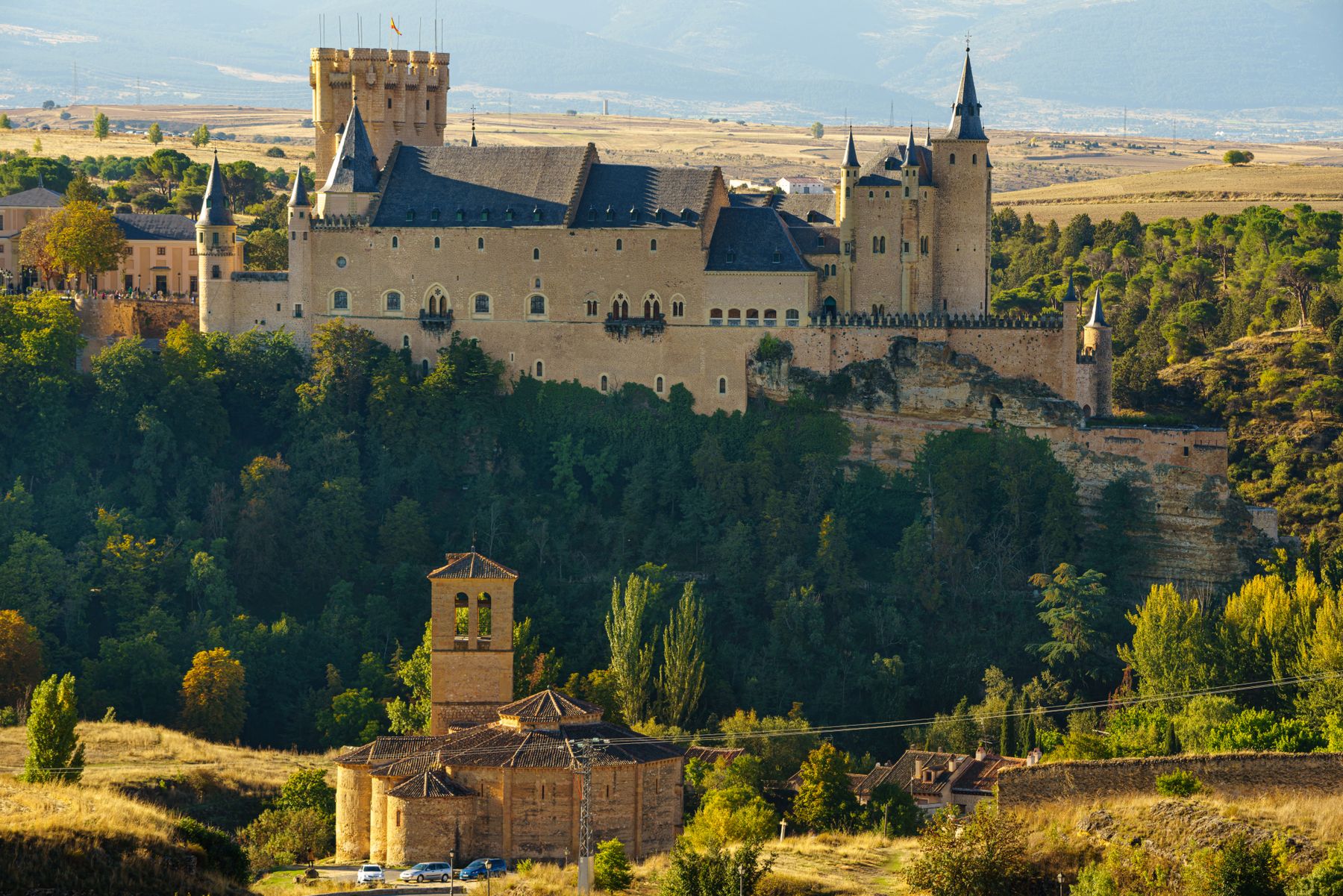
Segovia's Casco Antiguo occupies a narrow ridge, roughly 1,000 metres long and only a few hundred wide, with the Alcázar at the western tip and the Aqueduct at the eastern entrance. The ridge top along Calle Real and Calle Juan Bravo is close to level. Everything either side of that spine falls away steeply toward the Eresma on the north and the Clamores on the south. If you are choosing a hotel, this single fact matters more than star rating: a property on Plaza Mayor or Calle Isabel la Católica puts you on the flat; one down by the river or below the walls means a climb of 60 to 100 metres back up, often on cobbles or stepped lanes.
The old town is compact enough to cross on foot in about 25 minutes end to end, which is why most visitors do not need a car once inside. Arriving is the other half of the planning. The high-speed Avant train from Madrid Chamartín takes around 27 minutes to Segovia Guiomar station, which sits roughly 6 km outside the city and connects by bus and taxi. The older station nearer the centre is served by slower regional trains. Most long-distance buses from Madrid arrive at the Paseo Ezequiel González stop, a 10-minute walk from the Aqueduct and an easy introduction to the gradients.
The Classic Circuit and the Steps That Break It Up
Start at the Aqueduct on Plaza del Azoguejo, where the granite piers rise about 28 metres and the climb to the upper channel runs to roughly 100 steps. Do that early, before the day-trippers arrive from Madrid around mid-morning, and the experience is far calmer. From there, Calle Real climbs gently past the Casa de los Picos to Plaza Mayor and the cathedral, a stretch of perhaps 700 metres with only one noticeable rise. The cathedral cloister and the tower are separate tickets, and the tower climb is a real one; skip it if your knees are already complaining.
Beyond Plaza Mayor, Calle Daoíz leads toward the Alcázar, whose interior and Tower of Juan II involve further stairs. The walk out to the Alcázar is easy; the descent afterwards is where people notice the cobbles. A useful tactic is to plan the morning on the ridge and the afternoon downhill: from the Alcázar, follow the path down to the Alameda del Parral, or cross the Eresma at the Puente de San Marcos to see the monastery from below. Coming back up is the hard part, so budget 20 minutes for the return and take it slowly.
Where to Sleep, and What to Skip
For a two-night stay I would book inside the walls, ideally between Plaza Mayor and the Aqueduct, and accept a smaller room in exchange for walking everywhere. Hotels along Calle Juan Bravo and around the Plaza Mayor square put the cathedral, the Alcázar and the main restaurants within ten minutes on the flat. If you want the postcard view of the Alcázar from across the valley, you will trade that for a 15- to 20-minute climb each time you come back; lovely at sunset, tiring by the third day. Outside the walls, the streets around Plaza del Azoguejo are a decent compromise: flat, close to buses, and five minutes from the Aqueduct.
Two things to skip. First, the tourist road train: the old town is short enough that it adds little, and it cannot enter the pedestrian lanes anyway. Second, do not attempt a day trip to the Granja de San Ildefonso palace and a full old-town walk on the same day if you are travelling with children or older relatives; the palace gardens alone take two hours and the bus ride eats more. Late March to June and September to October give the best walking weather — Segovia sits around 1,000 metres and July afternoons regularly push past 30°C, which makes the shaded lanes off Calle Real genuinely welcome.
Surface, Footwear and the Rhythm of the Day
The old town's streets are a mix of granite setts, smooth flagstones and stepped alleys, with some lanes — notably the descents toward the Eresma — graded steeply enough that wet stone needs care. Trainers with a grippy sole are fine from April to October; in winter, when frost sits on north-facing steps, something with a proper tread is worth packing. Pavements outside the walls are narrow and uneven in places, and the route from the Aqueduct up to Plaza Mayor has a few stretches without a separate footway, so keep an eye on traffic near the Azoguejo roundabout.
A realistic rhythm is two half-days rather than one long one. Morning one: Aqueduct, Calle Real, Plaza Mayor, cathedral. Afternoon one: the Jewish quarter lanes below the cathedral, the Casa Museo Antonio Machado, and the mirador on Calle de la Muralla. Morning two: Alcázar and the descent to the Parral. That leaves afternoons free for a late lunch — Segovia eats around 14:00 to 15:30 — and a slow wander without a map. Because the ridge is so short, you are never more than 15 minutes from your hotel, which is the real argument for staying central.
Before you book
The questions people ask about Segovia, answered with this month’s numbers.
The central ridge is nearly flat, but side streets drop 60 to 100 metres to the Eresma and Clamores valleys. Expect steps and cobbles on any lane running north or south off Calle Real. Choose a hotel on or near the ridge if you want to avoid daily climbs.
Inside the walls, between Plaza Mayor and the Aqueduct, puts everything within a ten-minute flat walk. Outside, the Plaza del Azoguejo area is flatter and closer to buses, a good compromise. Riverside hotels are scenic but mean a climb every time you return.
The station is about 6 km out. Local buses run to the centre and connect with the Aqueduct area; taxis are available at the rank. Allow 20 to 25 minutes door to door. Regional trains use a closer station, but services are slower.
Two nights is comfortable. That gives you one morning for the Aqueduct, Calle Real and the cathedral, one for the Alcázar and the Parral descent, plus afternoons for the Jewish quarter and long lunches. One day works only if you move briskly.
Tickets are sold online and at the door, and the Alcázar's Tower of Juan II has limited capacity. In spring and autumn weekends, booking a timed slot saves queueing. The cathedral is usually easier to enter without advance purchase.
Late March to June and September to October suit walking best. July and August afternoons are hot, often above 30°C, so start early. Winter is quiet and clear but cold at around 1,000 metres, and north-facing steps can be frosty.
Trainers with a grippy sole work well from spring to autumn. In winter take shoes with a deeper tread for wet and frosty stone. The stepped lanes down to the Eresma are the slippery ones, especially after rain.
Yes. The old town is short enough to walk end to end in about 25 minutes, and buses from Guiomar and the Paseo Ezequiel González stop serve the centre. A car is a hindrance inside the walls, where parking is limited and streets are pedestrian.